
Here’s a peek at a “work in progress” in the game. A central mechanic of our game is the gradual return of light and color to the areas you’re exploring. In many of our past screenshots, you’ll see a “spotlight” of color around the main character. Before you get any color, the area will look dark and gloomy, something like this:
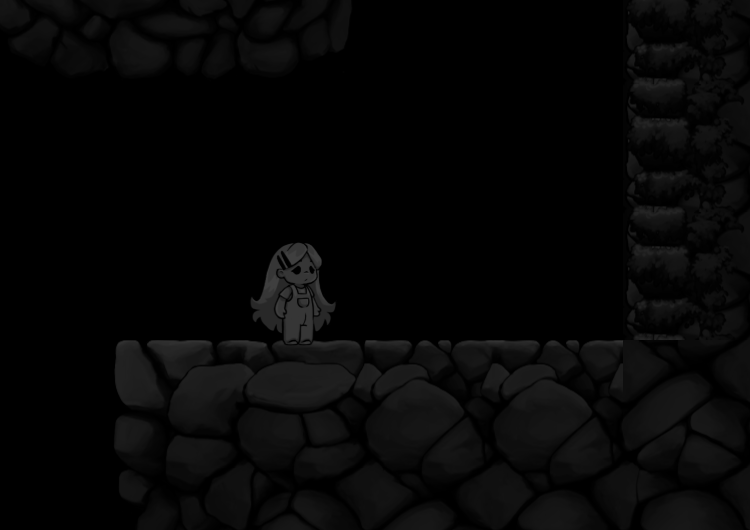
By bringing the music back to each area, color and life slowly starts to reappear. This initially shows as a “spotlight” that grows around the character. We love the visual feeling of light and color growing around your player as you bring each area back to life, and we wanted to add more mechanics around this idea.
We’ve had a simple “firefly” decoration in the game for a while now, but we hadn’t come up with any way to use them in gameplay. It seems natural for them to have their own spotlights which can be used to activate parts of the level. The idea is that your character plays one of the musical instruments they collect, which instructs the fireflies to fly to special locations in the level to activate puzzles. Seems fun.
For that to work, though we’re going to need more than one spotlight. Our spotlight uses a graphics technology called shaders to change the way that the level looks. I originally wrote it without the idea of extending it to multiple spotlights. Adding additional spotlights has been fun but tricky. They work fine when they’ve got a bit of space between them but … well, I’m not done yet.
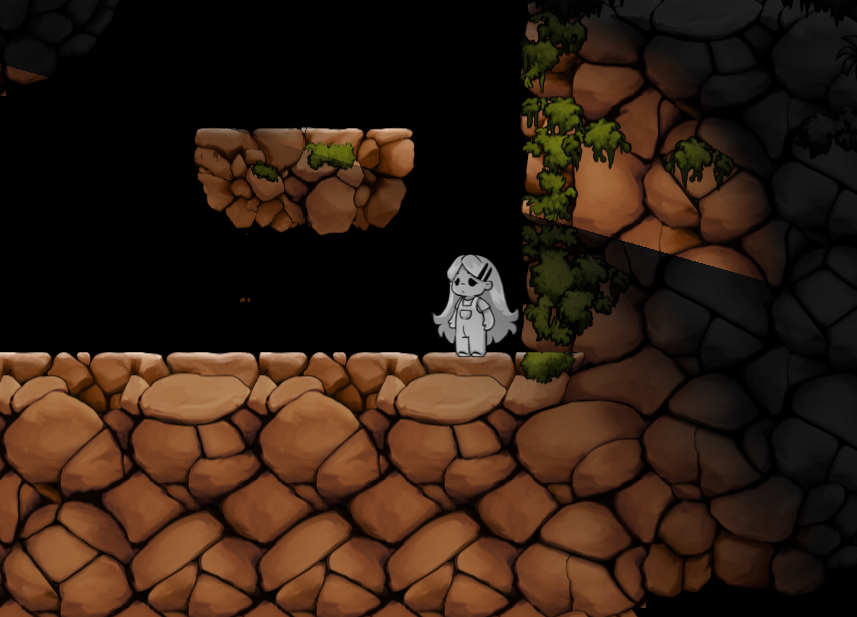
Here’s an example of the kind of visual glitches you get when you don’t have your spotlight math right! You can see a kind of diagonal “slash” through the level where one spotlight clashes with another one. The player’s spotlight is the upper-right one. Another huge spotlight is further down and to the left. The glitched area is where the two spotlights interfere with each other.
It’s pretty normal to see this kind of graphical glitching when we’re in the middle of working on something. This is actually a good sign, because it means I’m “nearly there.” Each of these spotlights is built from a complex mathematical soup that blends the colors, darkens the rims, randomly feathers the edges, and very slightly pulses to the beat of the soundtrack. On top of all that, we now need to make the spotlights work together and layer over the top of each other. It’s a fun challenge and an important part of getting the look and feel of the game right.